
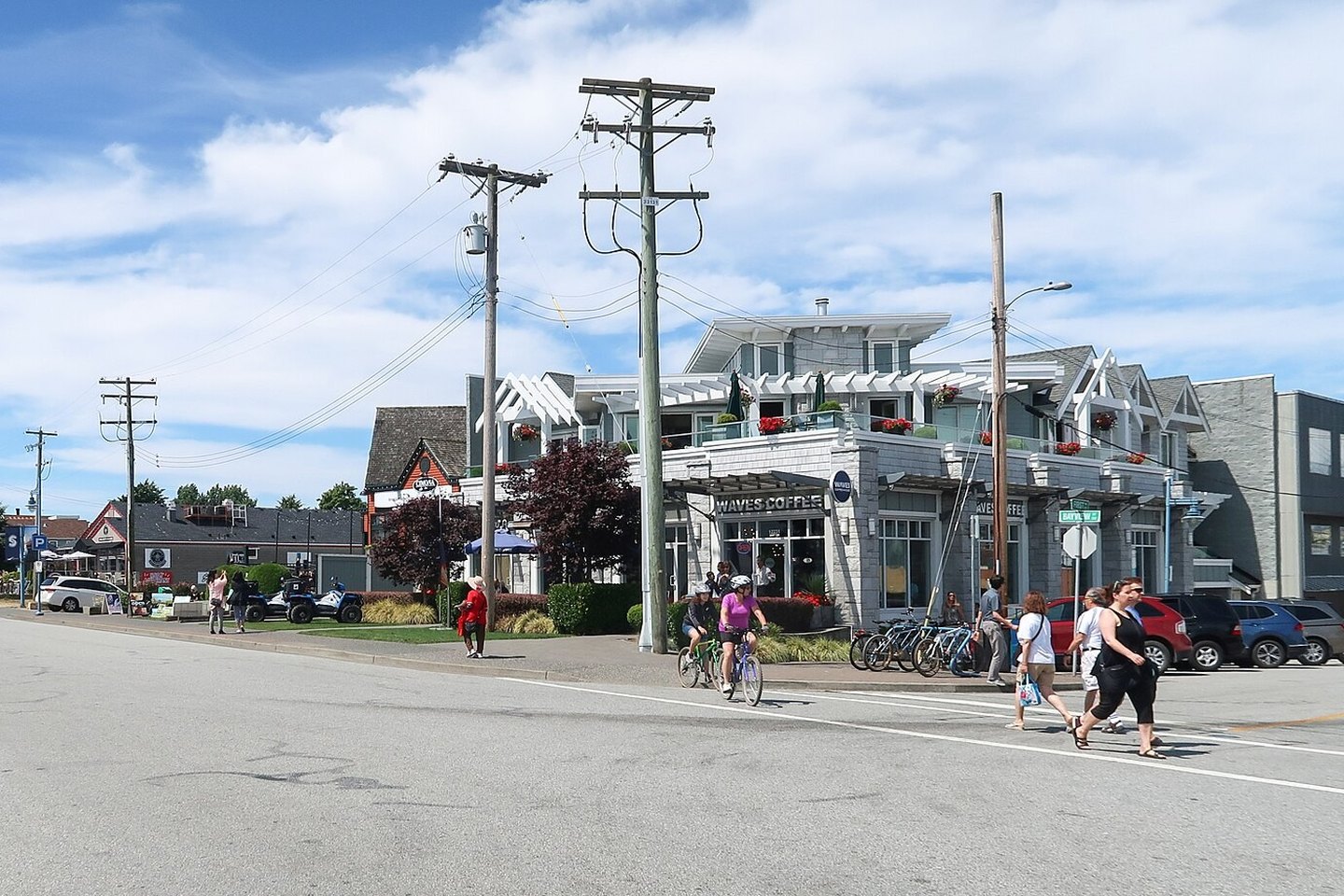

West-side houses
Seafair is detached houses, mostly asphalt, on flat lots. Older ones have a chimney or a porch joint. Newer ones are dark and even and leak at a single boot. Say which kind you can see from the driveway.
Houses nearer the river or a wide park have a clear run of wind. Tabs lift. Houses in the middle of the neighbourhood have trees and quieter roofs. Do not describe them as the same house.
A garage valley is still the place water concentrates. If the garage ceiling is wet, start there.
River wind and city rain
Richmond rain is steady in the winter. On an open lot it is driven under the laps. On a sheltered lot it simply finds the old flashing. After a storm, walk the yard. Pieces on the grass mean the wind face. No pieces, and a stain, means an opening that was already there.
Leaves plug the gutters. Ice does not sit on these roofs. If a gutter is full, say full. If it is empty and the ceiling is wet, say empty.
Decks on the river side sit under the drip. Say if people use that deck. Debris from a repair would land there.
Name the edge
Seafair and the street. River side or inside the neighbourhood. Then the room.
Say if the shingles are pale. Grit in the downspout is the slope wearing out.
Photos from the yard. No need to get on the roof.
Around the house
The river and the park edges are windy. The inside streets are not. If you can see the river from the wet room, say river. If you see a fence and a cedar, say fence. One Seafair house can have the river at the back and the cedar at the front. Name the wet side only, then mention the other so it is not forgotten.
A path along the dyke is public. If your eave is over that path, debris cannot land on it. Say public path. A private deck is a different sentence: say if the furniture stays out all winter.
Seafair is not Terra Nova and not Steveston. The street is what keeps the visit in the right place.
Dyke paths and private yards meet at some of these fences. If your eave overhangs the path side, say so. The city path is not a place for nails. If the eave overhangs your own lawn, the work is simpler. Seafair wind is the river wind, not the open-gulf wind of Terra Nova. Lifted tabs happen, and they are usually one edge. Say if the rest of the slope still lies flat.
Seafair has a river edge and an inside. Wind lifts that edge. Moss and a gutter are the inside problem. One house can have the river at the back and the cedar at the front. Name the wet side, then mention the other so it is not forgotten. A path on the dyke is public. An eave over that path cannot drop nails or old tabs onto people walking. A deck of your own is a simpler setup. Say if the furniture stays out. Seafair is not the park at Terra Nova and not the boardwalk at Steveston. The street keeps the visit in the right place. Lifted tabs on one edge, with the rest of the slope lying flat, are a repair of that edge.
River lots and inside lots should not share a first sentence. River lots: wind, a deck, lifted edges. Inside lots: a tree, a gutter, a valley by the garage. If you are unsure which you are, look out the wet window. Water, or a fence. That is the whole classification. A bathroom fan that you can hear in the attic, rather than outside, keeps the wood damp. Say if the fan does not seem to leave the house. It is a small fact and it explains a stain that does not match a hole.
Look out the wet window. If you see the river, the wind is part of that wall, and the edges on that side are what lift. If you see a fence, forget the wind and look at the gutter and the valley by the garage. One house often has both views. Lead with the wet one. A deck of furniture under the river eave needs a plan for whatever comes off the roof. A public path needs a stricter plan, because other people walk there. Say which you have. A fan that never seems to blow outside is worth a mention if the attic feels damp.
River in the window, or a fence. That choice leads the call. River means lifted edges and a deck or a path under the eave. Fence means a gutter and the valley beside the garage. Houses with both should lead with the wet side. Furniture that stays on a deck all year needs a cover plan if the roof above it will be worked on. A public path needs the debris kept off it entirely. A damp attic and a fan that never seems to vent outside belong in the same sentence if that is what you have noticed.
Window first, again, but the choice is river or fence. River: lifted edges, and whatever sits under the eave, deck or public path. Fence: gutter and the garage valley. Lead with the wet side if the house has both. Furniture that lives on the deck all year needs to be in the plan. A path other people use needs the debris kept off it. A fan that seems to stop in the attic, and an attic that feels damp, explain a stain that does not line up with a hole you can imagine from the yard.
River in the window means edges and whatever is under the eave. A fence means the gutter and the garage valley. Lead with the wet side. A deck full of furniture and a public path are different places for debris. A damp attic with a fan that stays inside is worth one sentence.
River view means edges and the eave below them. A fence means leaves and the garage valley. Start with the side that is wet. Decks full of furniture and public paths both sit under eaves, and they need different care. A damp attic is worth mentioning if the fan does not seem to reach the outside.
River or fence, said from the wet window. Deck furniture or a public path, if either sits under the eave. A fan that stays in the attic, if the attic is damp.
Start from the wet window. River and fence are different repairs, even on one house.
Do not describe a fenced yard as if it faced the river.
A public path under the eave changes how debris is handled.